Creative Careers in the Arts Interview
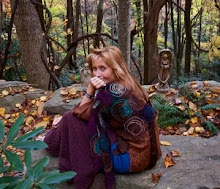
 Natalie Goldberg’s seminal work, Writing Down the Bones, was the first book that made me feel like a writer. I’ve been gleaning inspiration from her work since I was first introduced to Writing Down the Bones in high school. Her unquenchable curiosity, thirst for juicy details, and unsparing honesty kept me coming back for more with Wild Mind. Ms. Goldberg is, in fact, the first writer who truly seemed real to me — she wasn’t just a face in a dusty old book, but an actual flesh-and-blood woman battling it out on the page. I could picture having coffee with her in a cafe and writing for hours.
It is Natalie’s bravery — her ability to strip herself bare — which inspires me most. Her deeply revealing memoirs, The Great Failure, Long Quiet Highway, and Living Color, are a mirror into the soul of this complex writer, spiritual seeker, and artist. I enjoyed her novel, Banana Rose, because the characters pop off the page. It’s so real you can smell the rain on the sagebrush. Her amazing eye for detail is informed by her devotion to the visual arts — aside from writing, Ms. Goldberg is an accomplished painter in her own right — and her spiritual journey.
As I move through my own journey as a writer, I find myself called to read (and re-read) Long Quiet Highway, which is a memoir of her creative and spiritual journey. I find much to inspire me in this book. For the first time, I began to consider the act of writing as a spiritual practice, similar to meditation or prayer. In my own work, the spiritual and creative intertwine in a holy ecstasy of words. I pray with the pen and the page so fervently, and worship at the altar of the Muses. It was gratifying to learn about her spiritual journey, and Ms. Goldberg’s struggles with her identity and history were poignant and meaningful to me.
It is with great pleasure that I welcome Natalie Goldberg to Creativity Portal today. We’re celebrating the recent release of the Twentieth Anniversary e-book edition of Writing Down the Bones with a special two-part interview. The second portion of this interview will be published mid-February on Creativity Portal — so stay tuned for a juicy giveaway from Open Road Media.
Natalie, welcome to Creativity Portal. I’m honored to interview you today.
Q: I loved your novel, Banana Rose. Any plans to write more fiction soon, or another memoir?
A: I’m glad you loved it — I love it, too. I'm not naturally a fiction writer. I'm more into studying the movement of the mind, whereas fiction is interested in the movement of the story and must stay true to that narration. That said, writing this novel was the hardest thing I think I’d ever done. I had to learn the form and direction of fiction. For the future, I do have another story in mind about Yolanda, a twin, but that will have to come after other books. I think I will face Yolanda when I am old. Regarding memoirs, I have written a few in the past, such as the following: The Great Failure (2004), which is about the two most important men in my life; Long Quiet Highway (1992), which is about my spiritual and creative journey; and Living Color (1997), which is about my painting.Q: Your book, Long Quiet Highway, discussed your spiritual and creative work. How does your spiritual practice inform and inspire your writing and art? How do you use writing as part of your practice as a Zen Buddhist?
A: Writing and Zen for me is completely interconnected and interpenetrated. There is no difference between the two. Writing practice is another practice like sitting or slow walking. It's another way to study the mind.Q: What is the biggest obstacle in your creative path at present? How are you dealing with it?
A: Oddly my biggest obstacle right now is getting the time to write. I make a living as a writer — I just signed a new contract for a new book — and yet I have to fight for the time. Daily life is so seductive and pulls at you. I'm not married, I don't have children and yet I have to almost steal the time like a thief. For instance, when the first snow came to Northern Mexico, all I wanted to do was go snowshoeing. When friends called, I gave in. It was a wonderful time, but another day I did not write. (This is why early practice is so important, it helps build determination. I know eventually I will crack the whip and become so engaged that nothing will come before it.)Q: Writer’s block can be terrifying. In your opinion, what causes this dreaded disease of the creative soul — and what’s the cure?
A: I don't believe in writer's block. The cure: pick up the pen and get moving. Go, 10 minutes, tell me everything you know about mashed potatoes.Q: What sparks a poem or a painting? What inspires you, and makes your soul sing?
A: What sparks me is paying attention. One morning, I could be eating a piece of toast and not really be there, while the next, me and the toast are one. When I’m “right there” all kinds of associations wake up. Being right there opens worlds.Q: Which came first, the writer or the painter? How has your work as an artist shaped your writing — and vice versa? How does writing influence your art?
A: In 1974, it was like spontaneous combustion: I began to write, meditate and paint. Writing is essentially a visual art. You want the reader to see what you are saying. That's why you stay away from abstract description. Painting attunes my visual faculty and also in the silence of paint I work out unconsciously some of the things I want to say in writing. Painting makes me aware of detail. It is my darling pleasure. Without painting, writing becomes like eating cereal without milk. Too dry.